What Is Body Slugging? The Overnight Ritual Worth Trying This Winter
You've probably seen it on your feed by now: someone in a full face of petroleum jelly, calling it "slugging." It looks strange. It works.
But nobody's talking about the version that actually matters most in winter, body slugging. And almost nobody's talking about what you're supposed to slug with.
What Is Slugging, Exactly?
Slugging is simple: you apply a heavy, occlusive layer over your skin as the last step of your routine, then leave it on overnight. The name comes from the shine it leaves behind, your skin looks a little like a slug's trail.
The technique started in Korean skincare circles and made its way into dermatology recommendations for one reason: it works on a real, measurable problem. Overnight, your skin loses water through evaporation; something dermatologists call transepidermal water loss, or TEWL. Sealing skin with an occlusive layer traps that moisture in, giving your skin hours of uninterrupted repair time instead of hours of quiet water loss.
Why It Works (The Actual Science)
Skin repairs itself overnight. It's when cell turnover happens, when your barrier rebuilds, when active ingredients from your routine actually get absorbed instead of evaporating off your skin along with everything else.
An occlusive layer doesn't add hydration itself, it holds the hydration you already have in place. Think of it less as a moisturiser and more as a lid or seal.
That's exactly why the type of lid matters.
The Problem With Traditional Slugging
Petroleum jelly is the most common slugging product, largely because it's cheap and widely available. It forms an occlusive barrier, but that's all it does. It doesn't feed your skin anything. It's derived from petroleum, not botanicals, and it offers zero active nutrients, fatty acids, or antioxidants while it sits there.
It also, for many people, feels genuinely unpleasant. Heavy. Tacky. Impossible to wash out of sheets.
There's a better way to get the same occlusive effect, minus the trade-offs.
A Natural Alternative: Why a Dense Body Butter Works Better
This is where a concentrated, unwhipped body butter has an advantage that whipped or petroleum-based products simply don't.
A whipped body butter has air folded through it—less product, less occlusive strength, faster absorption that doesn't leave a true sealing layer behind. Petroleum jelly holds moisture in, but delivers nothing else.
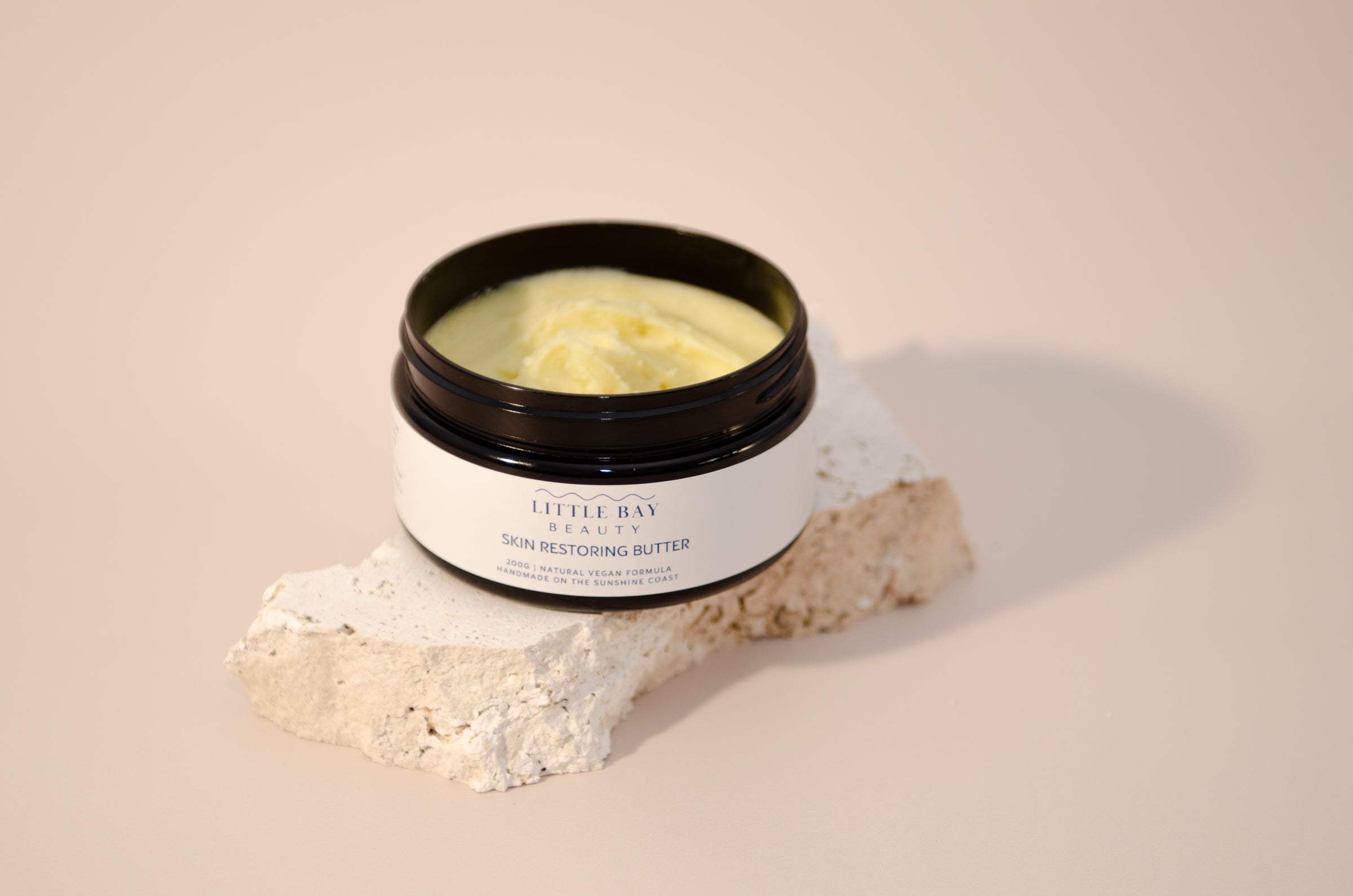
Our Skin Restoring Butter and Body Smoothing Butter are formulated to do both jobs at once. The density that makes them slow to melt is the same density that gives them real occlusive strength overnight. But unlike petroleum jelly, every layer is doing double duty—Cocoa Butter, Hemp Seed Oil, Milk Thistle Oil and Vitamin E are sealed against your skin all night, not just sitting on top of it.
You're not just trapping moisture. You're trapping actives your skin can actually use.
How to Body Slug With Little Bay Beauty
- Start with slightly damp skin. Apply straight after a shower or bath, while skin is still holding some water—this is what you're sealing in.
- Apply generously to problem areas. Elbows, knees, heels, and any patches of chronic dryness benefit most. In peak winter, a thin layer over your whole body works too.
- Warm the butter between your hands first. Because it's concentrated rather than whipped, it needs a moment of body heat to soften before it spreads easily.
- Leave it on overnight. Wear soft, breathable pyjamas if you're doing a full-body application, or leave feet and elbows uncovered.
- Rinse or wipe any excess in the morning. Skin should feel noticeably softer, not greasy.
Who Should Try Body Slugging
This ritual is especially worth trying if you experience:
- Chronic dry patches that don't respond to daily moisturiser alone
- Eczema-prone or reactive skin that needs a barrier-supporting overnight step
- Seasonal dryness that worsens through the cooler months
- Cracked heels, elbows, or knees that regular lotion doesn't touch
- Post-shower tightness that returns within hours
Our Take
Slugging isn't a new idea dressed up in a new name, the principle behind it (seal moisture in, let skin repair) is sound, dermatologist-backed logic. What's new is the chance to do it with something that nourishes as much as it protects.
That's the whole philosophy behind why we don't whip our butters in the first place: density isn't a limitation, it's what makes a formula capable of doing more for your skin overnight than a light, airy texture ever could.
If you're going to seal your skin overnight, seal in something worth keeping there.
Shop the ritual: Skin Restoring Butter — for intensive repair → Body Smoothing Butter — for daily hydration →
Betha Founder, Little Bay Beauty